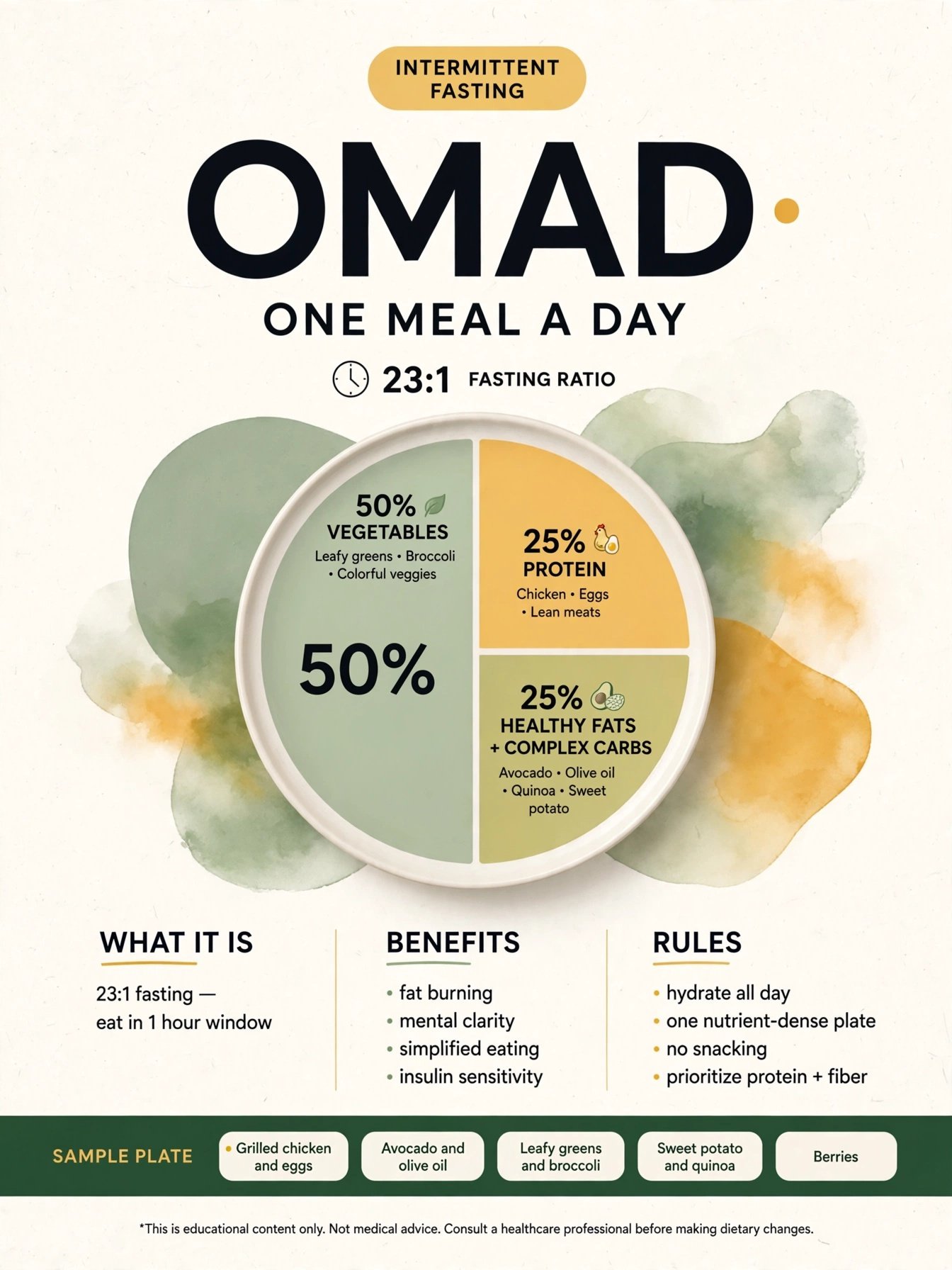
The OMAD diet, short for One Meal a Day, has become a popular approach to weight loss, with celebrities and influencers praising its simplicity and effectiveness. But what exactly is it, and more importantly, what should you eat during that single daily meal to actually lose weight?
This guide covers everything you need to know about OMAD meal ideas for weight loss, including sample meal plans, essential nutrients, and expert tips for success.
What Is the OMAD Diet?
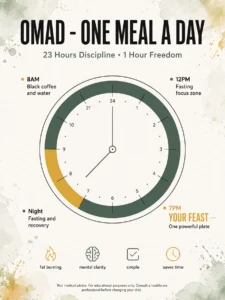
OMAD is an extreme form of intermittent fasting where you consume all your daily calories in one meal within a one-hour window and fast for the remaining 23 hours.
During the fasting period, you can drink water, black coffee, or herbal tea.
How OMAD Promotes Weight Loss
The weight loss benefits come from several mechanisms:
- Natural calorie reduction: Eating once daily typically reduces overall calorie intake.
- Extended fat burning: With glycogen stores depleted, your body turns to fat for energy, a state called ketosis.
- Improved insulin sensitivity: Longer fasting periods help regulate blood sugar.
- Reduced inflammation: Fasting triggers cellular repair processes like autophagy.
Essential Nutrients for Your OMAD Meal
When you eat only once daily, every bite counts. Your single meal must be nutrient-dense to meet your body’s needs. Here is what your plate should contain.
- Lean Protein: Prevents muscle loss, keeps you full. Sources include chicken, fish, eggs, tofu, and lean beef.
- Healthy Fats: Supports hormones and energy. Sources include avocado, nuts, seeds, and olive oil.
- Complex Carbs: Provides sustained energy. Sources include sweet potatoes, quinoa, and brown rice.
- Fiber-Rich Veggies: Provides vitamins and aids digestion. Sources include broccoli, leafy greens, and colorful vegetables.
- Important: Many OMAD practitioners eliminate processed foods, refined sugar, lactose, and gluten to reduce inflammation.
Balanced OMAD Meal Template
A well-constructed OMAD plate should include:
- Protein: A palm-sized portion, such as fish, chicken, eggs, or tofu.
- Complex Carbohydrates: One to two servings, such as quinoa, brown rice, or sweet potato.
- Healthy Fats: One to two servings, such as avocado, nuts, or seeds.
- Vegetables: Fill half your plate with colorful, fiber-rich options.
Sample OMAD Meals
Here are practical meal ideas to inspire your OMAD journey.
Mediterranean Salmon Bowl

6 oz grilled salmon
1 cup quinoa
2 cups roasted broccoli
Half avocado
Drizzle of olive oil and lemon
Nutritional highlights: Omega-3s, lean protein, fiber
Fiery Mexican Burrito Bowl
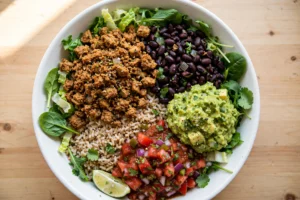
Seasoned ground turkey or chicken
Brown rice
Black beans
Salsa, guacamole, and leafy greens
Nutritional highlights: High protein, complex carbs, healthy fats
-
Chicken and Sweet Potato Plate
8 oz grilled chicken breast
1 large baked sweet potato
Large mixed salad with olive oil dressing
Nutritional highlights: Lean protein, complex carbs, vitamin A
3-Day Quick-Start OMAD Meal Plan
If you are looking for a quick reset over 3 to 5 days, here is a sample plan.
Day 1
7 tbsp cooked brown rice
Grilled beef with roasted potatoes
Mixed salad
Detox drink



Day 2
3 grilled chicken breasts, skinless
6 tbsp pasta
Boiled broccoli salad
1 piece of fruit
Day 3
Baked salmon with roasted peppers
4 boiled new potatoes
Large salad
Tips for OMAD Success
Start Gradually
If you are new to fasting, do not jump straight to OMAD. Try the 16:8 method, 16 hours fasting and 8 hours eating, first and gradually narrow your eating window.
- Stay Hydrated: Drink plenty of water throughout the day. Add sea salt or electrolytes to maintain energy levels.
- Eat Mindfully
- Savour your meal. Eating slowly helps prevent overeating and improves digestion.
- Listen to Your Body
- If OMAD causes excessive fatigue, dizziness, or distress, reconsider whether it is right for you.
- Support Your Journey: Join online OMAD communities or involve friends and family to stay motivated.
Who Should Not Try OMAD
- OMAD is not suitable for everyone. Avoid this diet if you are: Pregnant or breastfeeding.
- Under 18 years old.
- Underweight or recovering from illness or surgery.
- Managing uncontrolled chronic disease.
- Have a history of eating disorders.
- Taking medication that requires food.
Always consult a healthcare professional before starting OMAD, especially if you have underlying health conditions.
The OMAD diet can be an effective approach to weight loss when done correctly. The key is quality over quantity. Your one daily meal must be a nutrient-packed powerhouse.
While OMAD simplifies eating and can produce dramatic results, it is also the most extreme form of intermittent fasting.
Start gradually, prioritise balanced nutrition, and always listen to your body.
For many, the almost OMAD approach, a 20-hour fast with a 2 to 4 hour eating window, offers similar benefits with better digestive comfort.
Ready to try OMAD? Remember: one meal, 23 hours of fasting, and every bite counts.
Make it count with lean proteins, healthy fats, complex carbs, and plenty of vegetables.